

Pride Of Ninja Card Game Review

Updated: Apr 28
WBG Score: 8
Player Count: 3-5
You’ll like this if you like: Deck-building
Published by: Ninja Star Games
Designed by: Muneyuki Yokouchi (横内宗幸)
This is a free review copy. See our review policy here
Silent moves, loud consequences
There’s something immediately appealing about Pride of Ninja. Not just the theme, but the promise of outthinking your opponents with hidden information, clever drafting, and just a touch of chaos. After a few plays, what stands out most is how deceptively simple it feels at first… and how quickly that illusion disappears. This is not just a light drafting filler. It is a tight, tactical knife fight in a very small box.
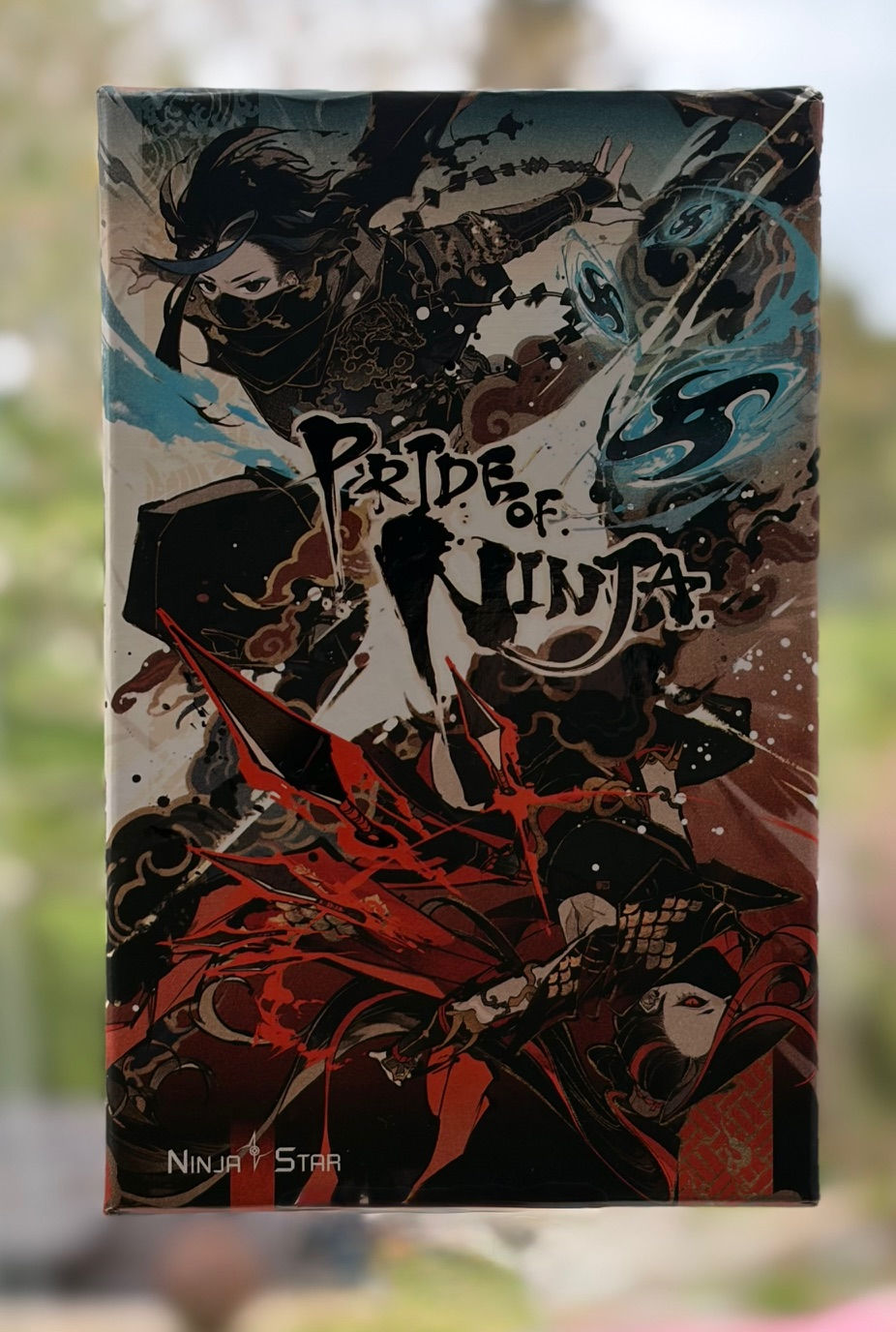
One early game summed it up perfectly. I stacked what I thought was a flawless ninja engine, feeling very pleased with myself… only to reveal everything and realise I had the most ninjas without hitting the safe threshold. Instantly slain. Back to zero. Everyone else quietly scooped up points while I sat there wondering where it all went wrong. That moment right there is Pride of Ninja in a nutshell. Let's get it to the table and see how it plays.
How to set up
Choose either the blue deck or the red deck, depending on how wild you want the experience to be. The blue deck is cleaner and more controlled, while the red deck introduces more risk and player interaction. Remove specific cards based on the number of players to tighten the experience, then shuffle your chosen deck and deal seven cards to each player. Six in a five player game which is then topped up to seven with one of the special black zero cards which is immediately placed face down in front of each player so they have six in their hands. Each player takes a temporary point tracker and tokens in their chosen colour, and sets their victory points to zero. Place the slain tokens within reach, and you are ready to begin.

How to play
Each round, players draft one card at a time, selecting a card and passing the rest to the player next to them until all cards have been chosen. As you draft, you build a tableau of four cards in the front row and three in the back row. One will already be in your back row in a six-player game. The front row is where cards are placed face up, showing your intentions, while the back row is hidden, keeping your plans secret.
Each time you choose a card, place it face down in front of you. Then, when all players have chosen, on the count of three, either reveal your chosen card and slide it to the front row, or keep it hidden and place it into the back.

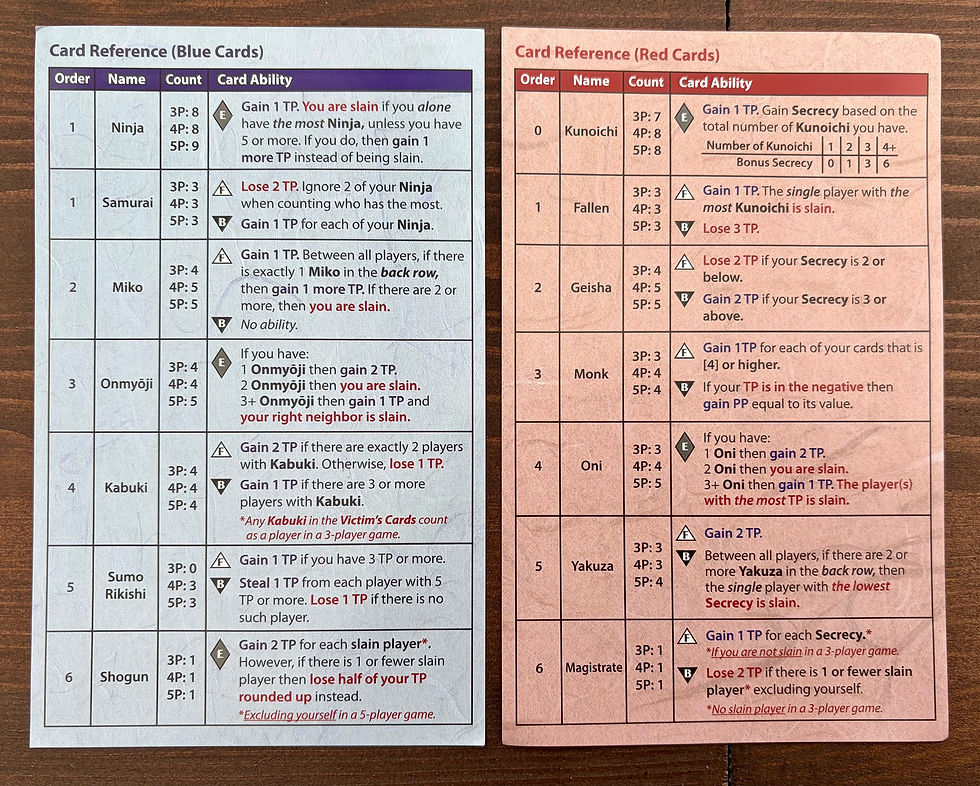
Once all cards are placed, the hidden cards are revealed and everything resolves in initiative order. Cards grant temporary points, manipulate other players, or potentially get you slain. If you are slain, your temporary points reset to zero for that round, which can be a brutal setback.
At the end of the round, any remaining temporary points convert into victory points. Track this on the main score board. The game continues over multiple rounds until someone reaches the target score of 20 points, or 15 in a five player game. If no one reaches that score, shuffle up and deal them out again.

What it feels like to play
Every decision sits in that uncomfortable space between logic and instinct. You are watching what others draft, trying to remember what is still in circulation, and guessing what might be hiding in those face down rows. Do you play conservatively, or push your luck for a bigger payoff?
The reveal phase is the highlight every time. Cards flip, plans collide, and someone at the table almost always groans as their strategy unravels. In one game, a perfectly timed Shogun turned a disaster round into a huge swing, simply because enough players had been slain at the right moment. It felt clever, lucky, and slightly unfair all at once.
Over time, the game shifts. You stop just playing the cards and start playing the people. You learn who pushes too far, who plays safe, and who likes to bluff. That evolving meta is what gives Pride of Ninja its staying power.
Pros
Tight, interactive drafting with meaningful decisions every turn
Strong player interaction with bluffing and prediction at its core
Two distinct decks that genuinely change how the game feels
Cons
Getting slain can feel harsh, especially for newer players
Some light memory and card tracking can give experienced players an edge
Visual clarity and readability may be an issue at a distance before you get used to the cards

Final thoughts
Pride of Ninja is a clever little game that punches well above its weight. It looks simple, plays quickly, but delivers a surprising amount of tension, interaction, and table talk. It will not be for everyone, especially those who dislike swingy outcomes or direct interaction, but for the right group it creates exactly the kind of memorable moments you want from a small box game. Just do not get too comfortable. In this game, confidence is often the first step to getting completely cut down.


