

Flockers Game Designer, Mark Swanson Interview

After spending time with Flockers and seeing how it quietly builds into something far more thoughtful than it first appears, I was keen to hear from designer Mark Swanson about where it all came from. In my review, I talked about the importance of timing, preparation, and those big payoff moments when everything finally clicks. It turns out that was very much by design.
So I caught up with Mark to dig into the inspiration behind the game, the thinking that shaped it, and what he hopes players take away from it.
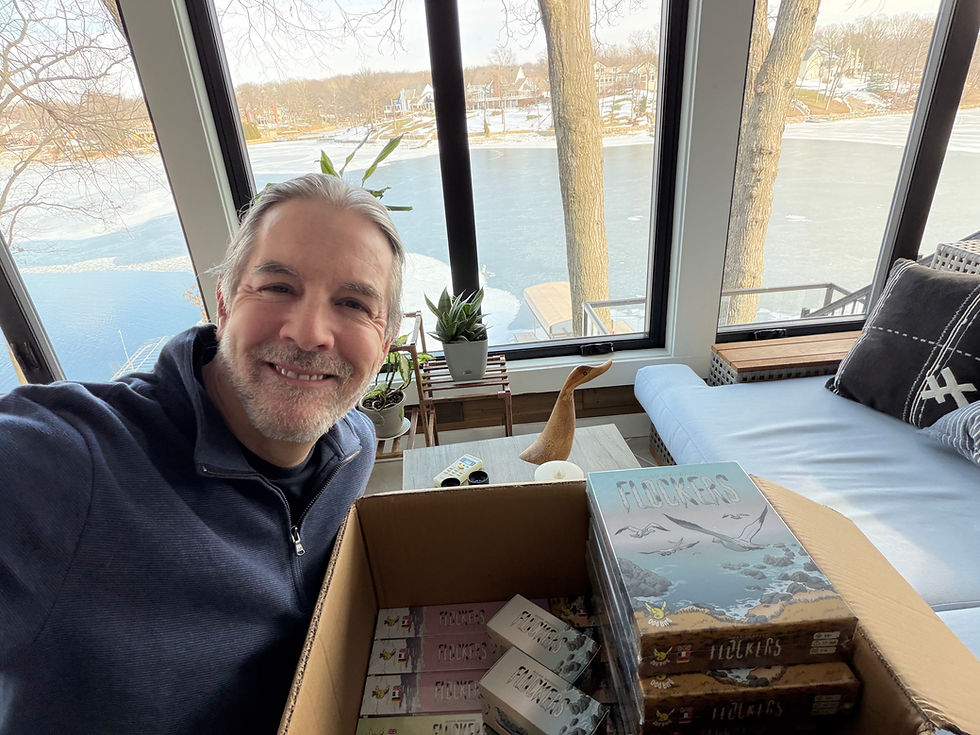
Hi Mark, thanks for talking with us. We love the game. What was your inspiration for making
Flockers?
Thanks, Jim. I really appreciate that!
Truth be told, part of the inspiration came from something a little unexpected. I’ve always been
fascinated by how sled dog teams in races like the Iditarod rely on a lead dog to navigate and set the pace, but that role is so mentally demanding that mushers often rotate dogs through that position.
There’s something really compelling about that shared responsibility, but also a bit sobering when you realize how taxing it can be.
That got me thinking about other species that travel long distances together, and particularly ones that shift roles dynamically. Migrating geese felt like a perfect fit, constantly adjusting formation, conserving energy, and working as a system.
From there, the design followed naturally. I wanted to capture that balance between movement, preparation, and sustainability in a clean, tactical way where timing - not just speed - drives success.
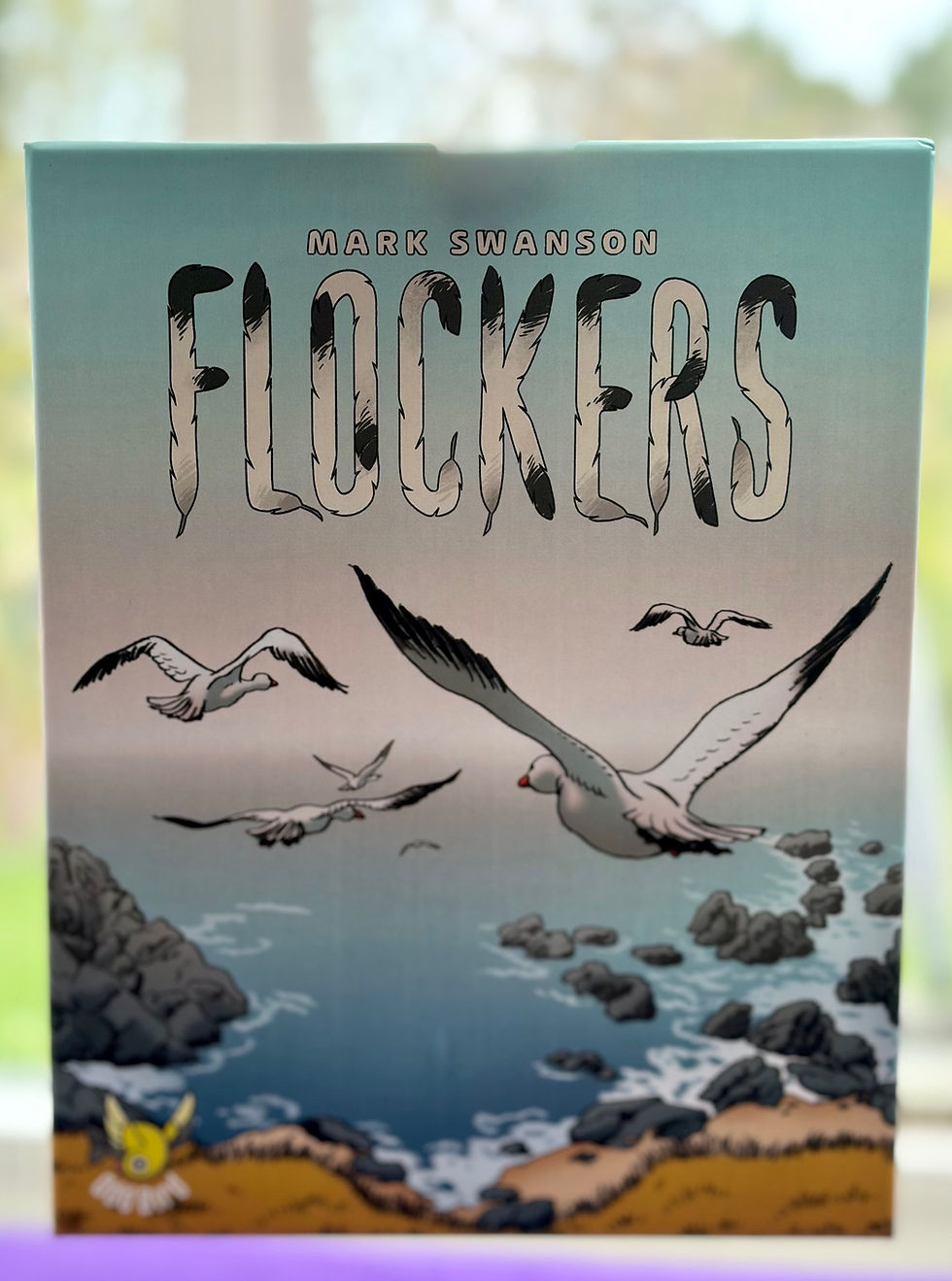
Well, that certainly comes across when you play Flockers. Who do you think this game is for?
I think Flockers is for players who enjoy thoughtful decisions without a heavy rules burden.
Certainly, it will resonate with people who love birds and nature, but mechanically it’s really for players who like weighing trade-offs. Do I move now, or prepare for something better later? Do I push forward, or make sure I can sustain that momentum?
It’s approachable enough for newer players, but there’s a satisfying layer for more experienced gamers who enjoy refining their strategy over multiple plays.
Folks can learn more about Flockers on Gamefound.
All your games play very differently. What do you think is the common link with a Mark Swanson game?
That’s a great question—and you’re right, they do play very differently on the surface.
For me, games are a bit like novels. Some are about the scenic journey, where you’re exploring systems and possibilities. Others are about rising tension and payoff, building toward something and then executing at just the right moment.
The common thread in my games is trying to marry those ideas with strong integration between theme and mechanics. I want players to feel like the decisions they’re making belong in that world. Whether it’s a large sandbox like Feudum or something more distilled like Flockers, I’m always focused on meaningful choices and giving players multiple paths to shape their experience.

Playing Flockers gets better and better with each game. How do you think a game like Flockers can stand out in this fast-paced, "first impression" world we live in?
The “first impression” world is definitely inescapable—and honestly, it’s the first step in the engagement cycle.
The art draws you in. The story immerses you. The components and production value give you that tactile connection. But ultimately, it’s the mechanics that have to deliver a satisfying puzzle.
If those elements are working together, the game starts to reveal more over time. With Flockers, the first play teaches the system, but later plays start to highlight timing, efficiency, and how small decisions compound.
That’s where replay value comes from, and I think that’s what gives a game a longer shelf life in a crowded market.
I agree. Its just getting people beyond those first few plays! What plans do you have for games after Flockers? Anything exciting you are working on?
I’m always working on something in the background—haha.
Right now, I have three projects in development. FIR is a worker placement game about timbermen in the late 1800s, focused on resource management and building out a working system over time.
Forelords is a dueling card battle set in a dystopian world, where players develop their biomes, gather resources, and deploy forces across a tactical grid.
And Fleck is a lighter, gladiator-themed trick-taking game where players secretly commit weapon cards, build strength through shards and amulets, and battle it out over a series of escalating rounds.
They’re all very different experiences, but they each explore systems, tension, and meaningful decision-making in their own way.
If folks are interested, they can see what Odd Bird is up to at www.oddbirdgames.com
OK< I have to ask! How come all your games begin with F?
Well, I’ve always loved alliteration in poetry, so after Feudum, it just became a fun, quirky thing to continue.
Of course, people are quick to point out the comparison to Friedemann Friese—and I swear that part was completely coincidental! My first reaction was, “Wait, Power Grid starts with a P...” until someone reminded me it was originally titled Funkenschlag, which roughly translates to “flying sparks” in German.
At that point, I figured—okay, maybe I’m not as original as I thought... but I’m committed now. : )
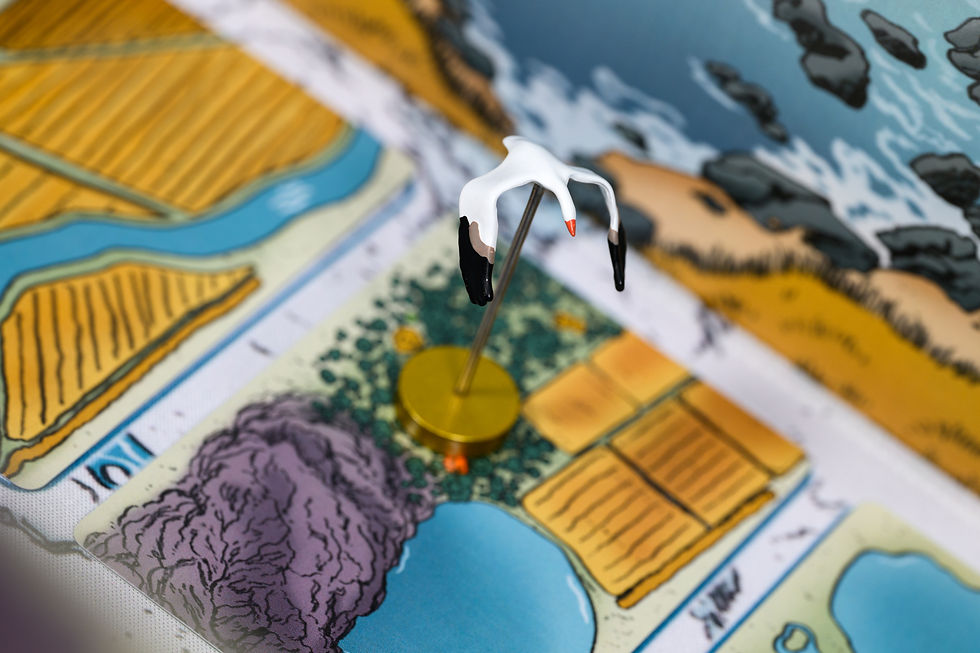
If Flockers feels like your flavour of fun, this is firmly one to follow. It is a finely fashioned framework that unfolds further with every foray, fostering focus, foresight, and fairly fearless decision-making in a fashion that feels genuinely fulfilling. You can find the campaign for this game here, and if you favour lighter fare with a fair bit of finesse beneath the façade, it is fully worth flicking through while the opportunity is still fresh.